
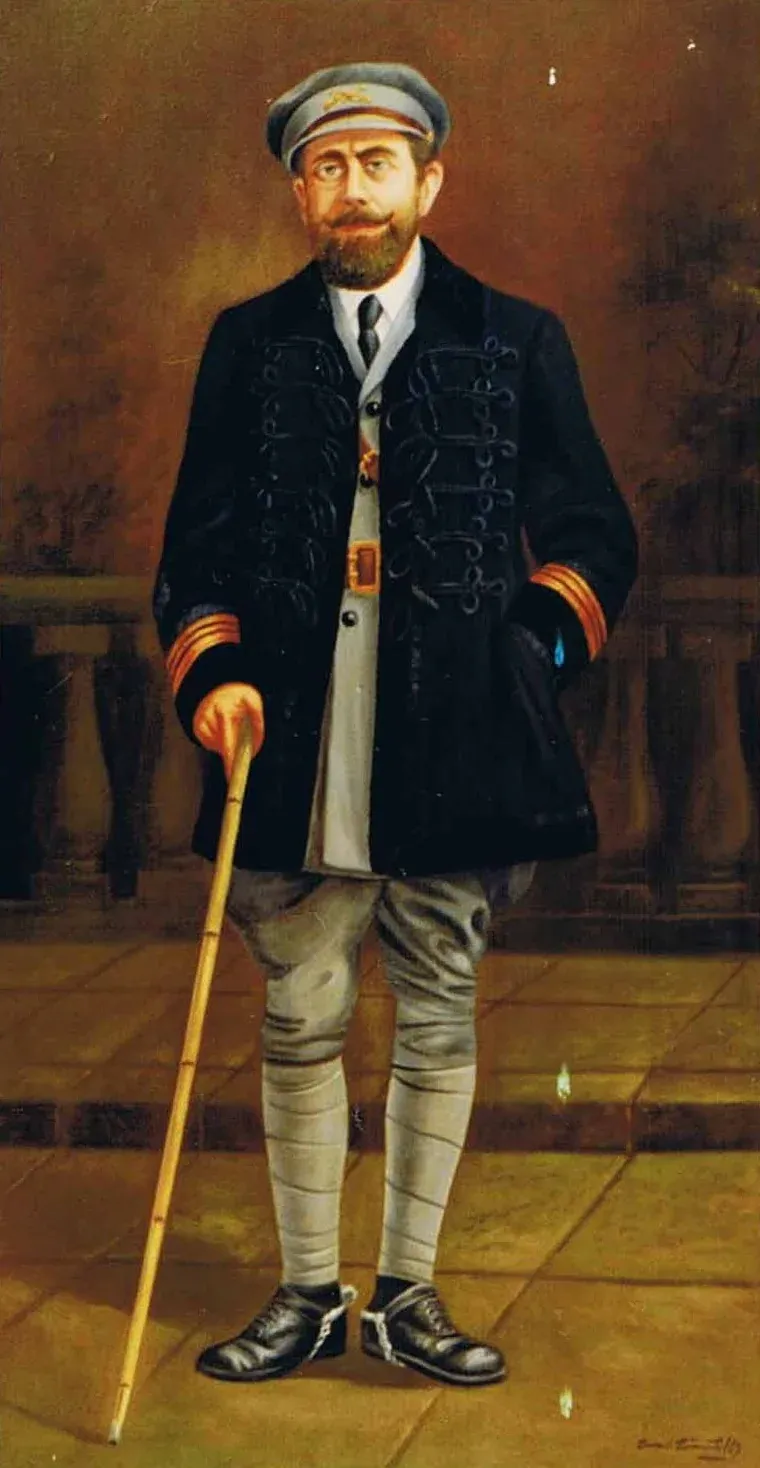
A Portuguese naval officer who governed Macau from 1846 to 1849, pursuing an aggressive expansionist policy. He was assassinated near the Barrier Gate in 1849. The square Praça de Ferreira do Amaral on the Macau peninsula carries his Portuguese name.
A governor who served less than three years, yet — through hardline policy and a dramatic end — left his name on a Macau square and in the city's memory.
João Maria Ferreira do Amaral was a Portuguese naval officer who served as Governor of Macau from 1846 to 1849. His forceful policies and his assassination make him one of the most contested figures in nineteenth-century Macau history.
Profile
- Chinese Name: 亞馬喇
- Portuguese Name: João Maria Ferreira do Amaral
- Born: 1803 (Lisbon)
- Died: 1849
- Region: Portugal / Macau
- Domains: Politics · Colonial administration
- Subject type: Historical figure · Governor of Macau
Background
Born in Lisbon in 1803, Amaral joined the Portuguese navy young and lost an arm during the war over Brazilian independence. By the mid-nineteenth century the Portuguese administration in Macau faced a shifting model of governance, and relations between the local community and the Qing authorities were delicate. It was against this backdrop that he was appointed Governor of Macau in 1846.
Career
I. Governor of Macau (1846)
Amaral arrived to take office in 1846. During his tenure he introduced measures that altered Macau's established order — taxation, road works, and an expansion of administrative reach — touching long-standing arrangements with local residents and the Qing authorities and steadily raising tensions.
II. Rising tension (1846–1849)
Throughout his governorship relations with the surrounding region remained strained. His forceful style was controversial at the time, and accounts written from different standpoints assess him very differently. This archive presents a neutral historical account and avoids praise or blame.
Defining Moments
I. The 1849 assassination
On 22 August 1849 Amaral was assassinated near the Barrier Gate (Portas do Cerco). The event became a major turning point in nineteenth-century Macau history and has long been narrated differently by Portuguese and Chinese sources alike.
II. The statue: erected and returned
After the Praia Grande reclamation of the 1930s, the Portuguese side erected a bronze equestrian statue of Amaral in 1940 on the reclaimed land and named the square Praça de Ferreira do Amaral after him. In the negotiations leading up to the handover of Macau, the statue was removed and returned to Portugal in October 1992, where it now stands in Lisbon. The square's name endures and today marks a major traffic hub on the Macau peninsula.