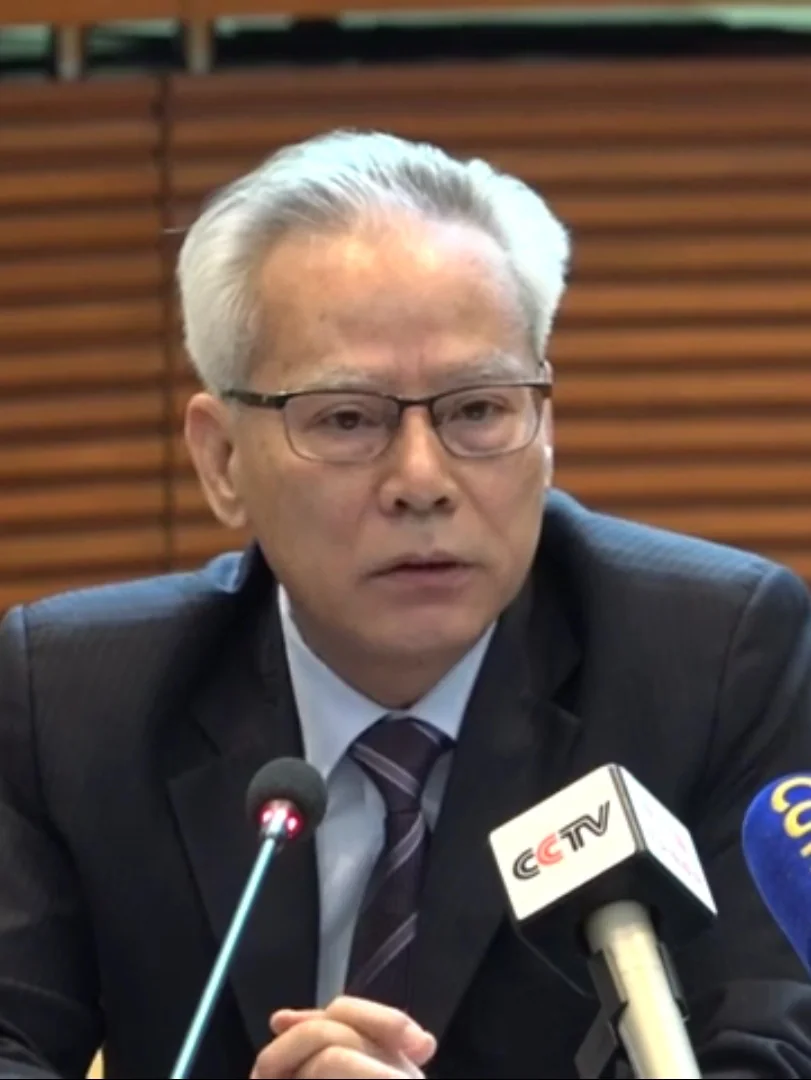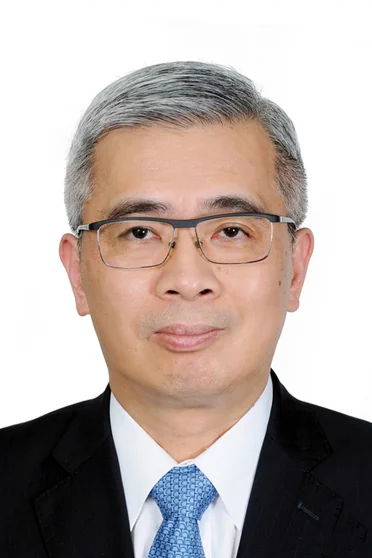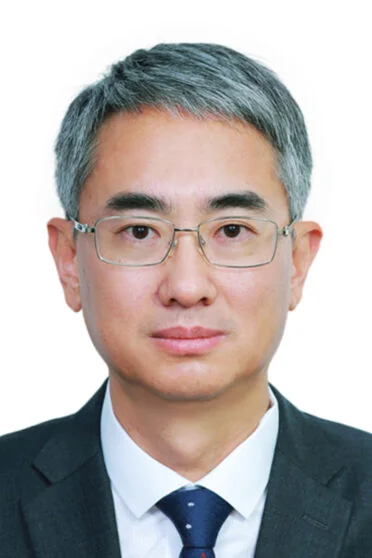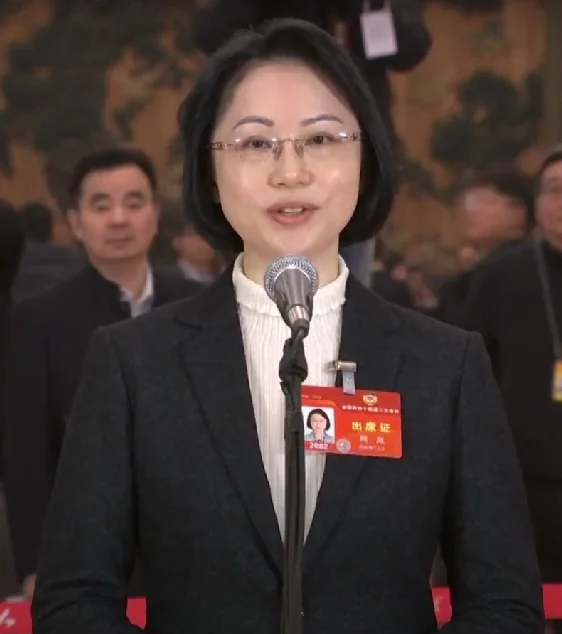
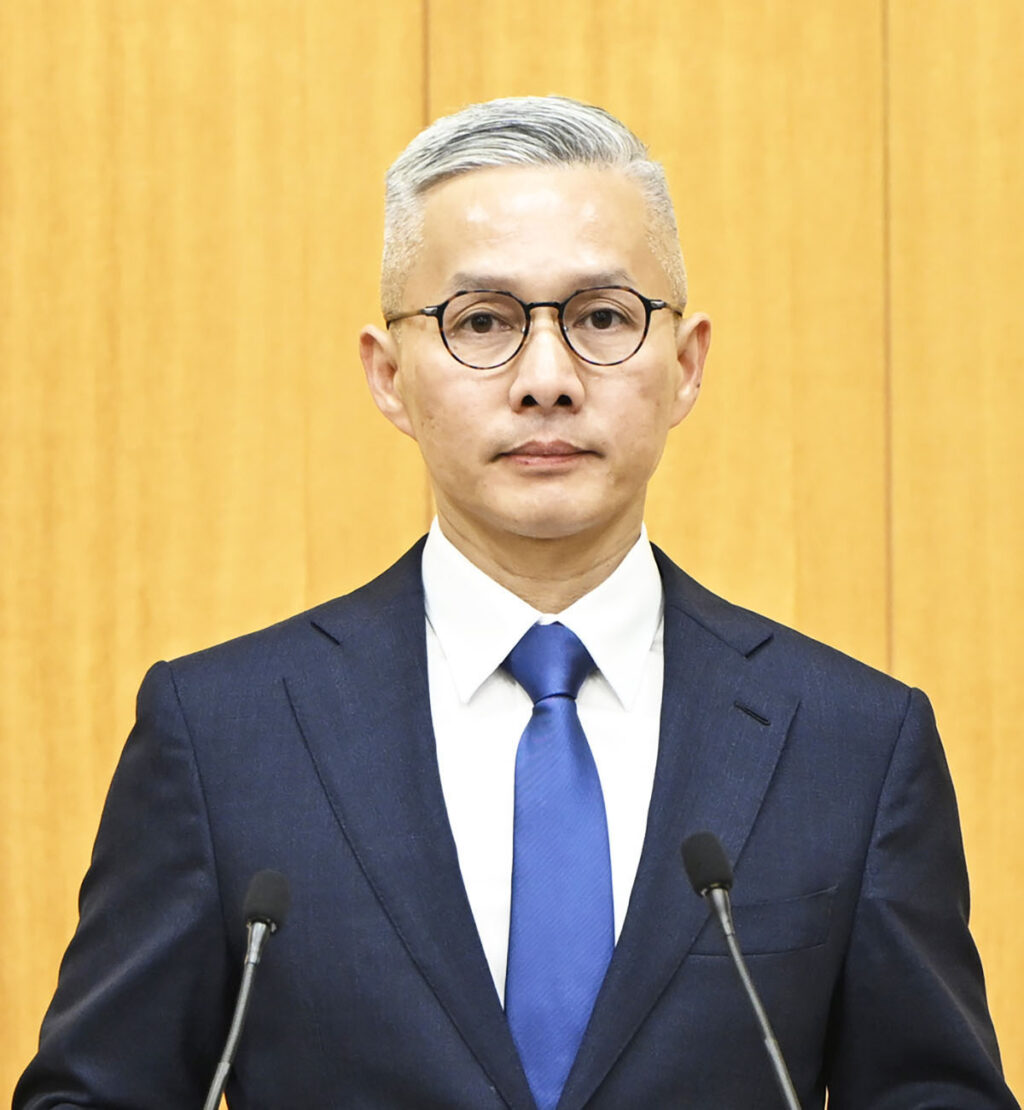
Served as Secretary for Economy and Finance of the 6th-term Macao SAR Government from 20 December 2024 to 16 April 2026 — 16 months, the shortest tenure in that portfolio since the SAR was established; removed by State Council decree on Sam Hou Fai's recommendation, citing "personal reasons". Joined the Macao Economic Services (DSE) in 1995 and spent his entire 29-year career to 2024 inside the bureau, rising from senior technician to head of research, deputy director, and director (April 2016 to December 2024, including the 2021 reorganisation into the Economic and Technological Development Bureau / DSEDT); concurrently chaired the Industrial and Commercial Development Fund. As Secretary, he was the technical architect of the 2022 gaming-concession tender outcomes, drove the first review of concessionaires' non-gaming investment obligations (March 2025), oversaw the satellite-casino closures and the 5,600+ employee redeployment, and from November 2025 concurrently led the Hengqin Cooperation Zone Executive Committee. In February 2026 he announced the MOP 11 billion seed (targeting MOP 20 billion) Macao Government Industrial Guidance Fund. Bachelor of Economics from the Universidade Católica Portuguesa; Master in Government Studies from the University of Saint Joseph.
Sixteen months, a MOP 20 billion industrial guidance fund, the satellite-casino shutdown, the Hengqin merger — Tai Kin Ip left the policy spine of Sam Hou Fai's first economic year intact, then exited in April 2026 with three words of explanation: "personal reasons". He became the shortest-serving Secretary for Economy and Finance in MSAR history.
Tai Kin Ip (戴建業) is the former Secretary for Economy and Finance of the Macao SAR (20 December 2024 – 16 April 2026). His entire 29-year public-service career was spent inside the Macao Economic Services bureau (DSE, renamed in 2021 to the Economic and Technological Development Bureau, DSEDT), where he served as Director from April 2016 to December 2024. Nominated to the cabinet by Chief Executive Sam Hou Fai in November 2024, he oversaw the financial, gaming-supervision, customs, maritime, labour, industry and consumer-protection portfolios for sixteen months — long enough to deliver some of the new government's most technically measurable wins, and short enough to become the first Sam-cabinet minister to leave office.
Profile
- Chinese Name: 戴建業
- English Name: Tai Kin Ip
- Ancestry: Jieyang, Guangdong
- Born: June 1968 (Macao)
- Domains: Politics · Business
- Industry: Public administration · Economic policy · Gaming supervision
- Subject type: Former Principal Official (Secretary for Economy and Finance, December 2024 – April 2026)
- Education: Bachelor of Economics, Universidade Católica Portuguesa; Master in Government Studies, University of Saint Joseph (Macao); certificate in China Public Administration, Beijing Language and Culture University
- Tenure: 20 December 2024 – 16 April 2026 (16 months)
Background
Tai was born in June 1968 in Macao, with ancestral ties to Jieyang in Guangdong. He completed his Bachelor of Economics at the Universidade Católica Portuguesa in Portugal in the late Portuguese era — one of a small cohort of 1990s Macao economic professionals to combine Portuguese-language economics training with local credentials. He later earned a Master in Government Studies from the University of Saint Joseph in Macao and completed a China Public Administration certificate at Beijing Language and Culture University — touching the Portuguese, Macao and Beijing educational systems in turn. He is married; no information on his spouse or children is on the public record.
He joined the Macao Economic Services (DSE) in October 1995 as a senior technician and never left the bureau until elevated to the cabinet 29 years later. He belongs to the technocratic generation of Macao economic-policy officials systematically cultivated before and after the Handover — often grouped with peers such as financial-services director Lei Wai Long as the "Economic Bureau generation" of Macao economic-policy civil servants.
Career
I. Economic Services and DSEDT (1995–2024)
Tai joined the Macao Economic Services (DSE) in October 1995 as a senior technician, becoming Head of the Research Department in 1998 and Head of the Research and Information Department in 1999. He served as Acting Deputy Director from 2000, was made substantive Deputy Director in 2009, and was promoted to DSE Director in April 2016 — twenty and a half years from senior technician to bureau head. Following the 2021 reorganisation that renamed DSE the Economic and Technological Development Bureau (DSEDT), he served as the inaugural DSEDT Director until his December 2024 elevation to the cabinet — almost nine years as bureau director in total. Throughout this period he concurrently chaired the Industrial and Commercial Development Fund, which administers Macao's SME financing, government industrial-policy loans, intellectual-property, commodity inspection and consumer-protection functions, and he sat on the technical evaluation architecture of the 2022 Gaming Concession Public Tender Committee.
II. Secretary for Economy and Finance (20 December 2024 – 16 April 2026)
On 30 November 2024 the State Council, on Chief Executive-elect Sam Hou Fai's nomination, appointed Tai Secretary for Economy and Finance of the 6th-term MSAR Government; he was sworn in on 20 December 2024, succeeding Lei Wai Nong of the Ho Iat Seng cabinet. The portfolio spans the Financial Services Bureau, the Monetary Authority, the Gaming Inspection and Coordination Bureau, Customs, the Labour Affairs Bureau, the Economic and Technological Development Bureau, the Maritime and Water Affairs Bureau, the Statistics and Census Bureau, and the Macao Institute of Financial Services. Ex officio under the Basic Law, he joined the Executive Council.
The first eleven months produced the most technically measurable deliverables of the Sam cabinet: in the April 2025 Policy Address debate he formally established finance as the fifth pillar of the "1+4" diversification framework, with three flagship workstreams (a two-year e-MOP digital pataca prototype, the construction of a domestic bond market, and a new Securities Law); in March 2025 he activated the contractual lever built by the 2022 tender, launching the first three-year review of concessionaires' non-gaming investment commitments; and from June to December 2025 he ran the transition for the satellite-casino industry-wide shutdown mandated by the new gaming law, telling the Legislative Assembly on 24 November 2025 that "1,600 satellite-casino employees have smoothly returned to their respective concessionaires", a figure that reached 3,500 by 22 December and ultimately covered some 5,600 local and 400 foreign workers — Sam's biggest labour-policy win of his first year.
On 17 November 2025 Sam elevated Tai from Deputy Director to Director of the Hengqin Cooperation Zone Executive Committee and Secretary-General of the Management Committee, succeeding André Cheong; together with Wong Sio Chak (Secretary for Administration and Justice), Tai now held the operational anchor of the cross-border development zone.
III. The April 2026 exit
On 27 February 2026 Tai unveiled the Macao Government Industrial Guidance Fund: a MOP 11 billion seed drawn from accumulated returns on the fiscal reserve, targeting MOP 20 billion after private-capital matching, deployed through a three-tier mother-and-sub-fund structure under a "patient capital" philosophy and explicitly aligned with China's 15th Five-Year Plan. This was the executable form of the "Government Industrial Fund" concept Sam Hou Fai had set out in his first Policy Address.
Six weeks later, on 16 April 2026, the State Council announced — on Sam Hou Fai's recommendation — that it "agreed" to Tai's removal as Secretary for Economy and Finance, citing his own request for "personal reasons". Sam publicly thanked him for "his commitment to lawful governance and his contributions" and personally took over the day-to-day operation of the portfolio. The abruptness drew unusual coverage from Macao and Hong Kong outlets (HK01, UDN/Liánhébào, Hoje Macau, Macao News, Macau Daily Times, Plataforma Media, GGRAsia, IAG/asgam, Macau Business): he had appeared at a tourism expo only six days earlier with no sign of departure, was scheduled to accompany Sam Hou Fai on a planned visit to Portugal and Spain, and had just been handed an unusually concentrated portfolio over economic policy, contractual enforcement, Hengqin coordination and capital allocation. He thus became the shortest-serving Secretary for Economy and Finance in MSAR history (16 months), and the first principal official of the Sam Hou Fai cabinet to leave office.
Defining Moments
1. The 2022 gaming-concession tender — technical architect (July–November 2022)
After the revised Gaming Law passed in June 2022, the government opened a public tender for six new ten-year gaming concessions. André Cheong (then Secretary for Administration and Justice) chaired the Public Tender Committee, and Tai sat on it ex officio as DSE Director — the principal technical official capable of converting the Chief Executive's strategic intent (diversification, non-gaming investment, local employment) into evaluation criteria and a MOP 108.8 billion non-gaming investment commitment built into the contracts. After 2023 GGR exceeded the MOP 180 billion threshold, the automatic 20% uplift raised the obligation to MOP 130.4 billion. This contract architecture became the central lever Tai would wield as Secretary in 2025.
2. The April 2025 Policy Address debut — "finance as the fifth pillar" (April 2025)
In his maiden Policy Address debate as Secretary, Tai formally elevated finance to the fifth pillar of Macao's "1+4" diversification framework, with three flagship workstreams: an e-MOP two-year prototype, the build-out of a domestic bond market, and a new Securities Law. He simultaneously disclosed that per-capita visitor spending in 2024 had fallen 14.6% year-on-year and recommended revising the 2025 GGR forecast down from MOP 240 billion to MOP 228 billion — the new government's first public acknowledgement that gaming alone would not carry the budget. (2025 GGR ultimately came in at MOP 247.4 billion, +9.1% YoY — vindicating his caution.)
3. The March 2025 concessionaire review — enforcing the 2022 contracts (29 March 2025)
On 29 March 2025 Tai announced the first three-year review of the six gaming concessionaires' 2023–2025 non-gaming investment commitments, requiring annual implementation reports by 31 March and next-year plans by 30 September, and taking personal charge of the gaming operators' old-district revitalisation projects. This established his instinct as enforcement, not renegotiation — a sharp break from Lei Wai Nong's more emollient style and the concrete enforcement face of Sam's "rule by law" rhetoric in the gaming sector.
4. The November–December 2025 satellite-casino closure (24 November – 22 December 2025)
The 2022 gaming law required all satellite casinos to either close or be absorbed by 31 December 2025. Tai had committed in June 2025 that concessionaires "must fully absorb all employees". On 24 November he reported in the Legislative Assembly that 1,600 satellite-casino employees from the first six closed satellites had been redeployed; by 22 December the figure reached 3,500, ultimately covering some 5,600 local and 400 foreign workers. This was the single biggest labour-policy delivery of Sam's first year — completed without street-level fallout and consistently identified by gaming-industry outlets (GGRAsia, IAG/asgam, AGB) as his cleanest execution.
5. The February 2026 Government Industrial Guidance Fund (27 February 2026)
On 27 February 2026 Tai announced the Macao Government Industrial Guidance Fund: an MOP 11 billion seed, targeting MOP 20 billion after private-capital matching, deployed under a "patient capital" doctrine into emerging industries, industrial upgrading, technology commercialisation and early-stage tech firms, explicitly aligned to China's 15th Five-Year Plan. The three-tier mother-and-sub-fund structure upgraded the SME-financing tools Tai had run for years at DSEDT into a cabinet-level national-industrial-policy vehicle. The flagship landed six weeks before he was removed.
6. The 16 April 2026 "personal reasons" departure
The State Council's decree of 16 April 2026 removed Tai from office on his own request, citing "personal reasons". The abruptness — six days after a public appearance at a tourism expo, with a Portugal and Spain trip on his calendar — drew open scepticism from Macao and Hong Kong commentators. The Chinese-affairs columnist Li Chun (UDN, syndicated by HK01) read it as a Beijing test case for "departmental-head accountability"; pro-democracy legislator José Pereira Coutinho (Macau Daily Times) said the secretariat "seems to have failed to keep pace with policies" amid deteriorating conditions, noting that fresh-graduate entry salaries had fallen back to the MOP 8,000–9,000 levels of two decades ago. Macau Daily Times' exit analysis singled out the satellite-casino closure's knock-on effect in the ZAPE district as the one concrete policy decision journalists tied — never officially — to the exit. By late May 2026 no successor had been named; Sam Hou Fai held the portfolio personally.
Public Character
Press coverage of Tai converges on the same descriptors: economic-bureau lifer, low-profile, business-friendly, process-oriented. Reuters/The Star called him a "seasoned economy minister"; Macao Magazine a "long-serving civil servant"; Macau Business in its December 2024 "Team Sam" piece summarised business circles as "expressing positive expectations" about him; Sonny Lo grouped him with the cabinet's "political caution, administrative grooming amid stability" picks.
The first eleven months of his tenure earned relatively positive assessments. The March 2025 non-gaming review, the April 2025 elevation of finance to a fifth pillar, the November–December 2025 satellite-casino redeployment of 5,600 workers, and the February 2026 industrial guidance fund were treated by gaming-trade outlets (GGRAsia, IAG/asgam, AGB) as "substantive structural contributions". Plataforma Media described his rhetorical register as "tom firme e convicto" (firm and convicted in tone).
Critical commentary clusters on two lines. AAMacau / 論盡媒體 maintains a dedicated 戴建業 tag archive, recurring on imported-labour oversight, "black work," local employment ratios, and the ZAPE satellite-casino knock-on effects — directly elected legislator Ron Lam publicly pressed Tai on imported-labour supervision on 13 November 2025. Macau Daily Times' 17 April 2026 exit analysis identified the ZAPE district shock from the satellite closures as the single most politically toxic policy decision of his tenure. Legislator José Pereira Coutinho publicly attacked the secretariat's "failure to keep pace" and the deterioration of entry salaries on the day of the removal.
At the central level, Xi Jinping's 16 December 2025 written verdict — that Sam's first year was "enterprising and pragmatic", with "moderate diversification achieving new progress" — mapped almost entirely onto Tai's policy spine. But the 16 April 2026 State Council removal decree carried no praise of any kind — a striking contrast with the elaborate Xi praise four months earlier. Macau Business described the announcement as "formulaic"; Hoje Macau framed Tai as the Sam cabinet's "first lost Secretary".
Comparatively: predecessor Lei Wai Nong (Sec for E&F 2019–2024) came from banking (Tai Fung Bank) and served a full five-year term across COVID; Tai's entire career was inside the Economic Bureau, and he served less than 16 months — the shortest tenure in the Economy and Finance portfolio in MSAR history. Among Sam's five principal officials, Wong Sio Chak and André Cheong were Ho Iat Seng holdovers — the cabinet's stability picks; Tai, O Lam and Raymond Lam were Sam's new faces — and Tai was the first to fall.
Key Achievements
- Secretary for Economy and Finance of the 6th-term MSAR Government (20 December 2024 – 16 April 2026; 16-month tenure, the shortest in that portfolio since the SAR was established)
- Inaugural Director of the Economic and Technological Development Bureau (DSEDT) (2021–2024), preceded by Director of the Economic Services Bureau (DSE) (April 2016 – 2021) — almost 9 years total as bureau head
- Director of the Hengqin Cooperation Zone Executive Committee and Secretary-General of the Management Committee (17 November 2025 – 16 April 2026), elevated from Deputy Director and succeeding André Cheong
- Member of the 2022 Gaming Concession Public Tender Committee and one of the principal technical architects of the MOP 108.8 → 130.4 billion non-gaming investment contract structure
- Lead minister for the March 2025 first three-year review of concessionaires' non-gaming investment commitments — establishing an enforce-the-contract enforcement style
- Lead minister for the November–December 2025 satellite-casino shutdown and redeployment of 5,600+ workers — Sam Hou Fai's single biggest labour-policy delivery of his first year
- Architect of the April 2025 elevation of finance to the fifth pillar of the "1+4" framework, with the e-MOP two-year prototype, bond-market construction, and new Securities Law as flagships
- Launched the February 2026 Macao Government Industrial Guidance Fund (MOP 11 billion seed targeting MOP 20 billion total) — Sam Hou Fai's Policy Address concept of a government industrial fund, made concrete
- Chairman of the Industrial and Commercial Development Fund (2016–2024, nine years) — long-running anchor of Macao's SME financing, government industrial-policy loans, and consumer-protection programmes
Information compiled from gov.mo (Chinese and English principal-officials pages and press releases), the Government Information Bureau (gcs.gov.mo), Xinhua, Reuters, SCMP, Macau Daily Times, Macau Post Daily, Macao News, Macao Magazine, Macau Business, Plataforma Media, Hoje Macau, Ponto Final, GGRAsia, Inside Asian Gaming (asgam), AGB Brief, Wah Ou Pou (新華澳報), Lik Pou (澳門力報), HK01, UDN, Allin News, and AAMacau / 論盡媒體, among other publicly available sources. If anything is inaccurate or needs updating, please contact us — we aim to respond within 48 hours.