
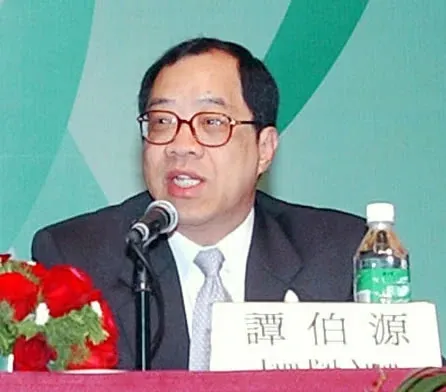
Macao's first Secretary for Economy and Finance (20 December 1999 – 19 December 2014) and among the longest-serving holders of a single principal-official portfolio in the post-Handover era. Born in May 1949 in Macao, he was schooled in Macao and Hong Kong (St Francis of Assisi's College), studied business administration in the United Kingdom, and earned a Chinese-law diploma and an MBA from the University of East Asia in Macao. A businessman by background — Vice-Chairman of the Macau Manufacturers Association and a board member of the Macau Chinese Chamber of Commerce — he was named to the SAR Preparatory and Nominating Committees before the Handover and served on the 9th and 10th CPPCC National Committees. His portfolio covered finance, taxation, banking, gaming, labour, and economic development through the 2002 gaming-liberalisation, the 2005 Banco Delta Asia affair, and the boom that pushed Macao's gaming revenue past Las Vegas. He was succeeded by Lionel Leong Vai Tac in 2014 and holds the Grand Lotus / Gold Lotus honour.
From the family firm's ledgers to the SAR's first government budget, and on to the boom that lifted Macao's gaming revenue past Las Vegas — Francis Tam Pak Yuen, as the territory's first Secretary for Economy and Finance, presided over the most dramatic wealth expansion of the post-Handover era.
Francis Tam Pak Yuen is the first Secretary for Economy and Finance of the Macao SAR (20 December 1999 – 19 December 2014). A businessman by background with an MBA from the University of East Asia, he served fifteen years under Chief Executives Edmund Ho Hau Wah and Fernando Chui Sai On — among the longest tenures in any single principal-official portfolio in the post-Handover era. His tenure spanned the 2002 gaming liberalisation, the 2005 Banco Delta Asia affair, and Macao's rise from a small enclave to the world's largest gaming market.
Profile
- Chinese Name: 譚伯源
- English Name: Francis Tam Pak Yuen
- Born: May 1949 (Macao)
- Domains: Politics · Economy and finance
- Industry: Public finance · Gaming regulation · Economic development
- Subject type: Official (former Secretary for Economy and Finance)
- Education: Advanced National Diploma in Business Administration (UK); Chinese-law diploma and MBA, University of East Asia (Macao)
- Term: 20 December 1999 – 19 December 2014
Background
Tam was born in May 1949 in Macao. He attended primary school in Macao and secondary school in Hong Kong (St Francis of Assisi's College), then studied in the United Kingdom for an Advanced National Diploma in Business Administration. Returning to Macao, he took a Chinese-law diploma in the 1970s at the University of East Asia (the forerunner of the University of Macau) and an MBA in 1986 — an unusual "law-plus-business" credential combination among the Macao Chinese elite of the day.
From 1970 he helped run the family's commerce, logistics, and property businesses, and rose through Macao's chamber-of-commerce system as Vice-Chairman of the Macau Manufacturers Association, a board member of the Macau Chinese Chamber of Commerce, and a council member of the China Glorious Undertaking Promotion Association. This "family-firm to chamber-leader" path made him a natural choice as Beijing sought a finance minister for the new SAR: he was appointed to the SAR Preparatory Committee and the Nominating Committee for the first government, and served on the 9th and 10th CPPCC National Committees.
Career
I. Business and transition roles before the Handover (1970–1999)
Before the Handover, Tam's public role rested on the business community and the CPPCC system. As a leadership figure in the Macau Manufacturers Association and the Chinese Chamber of Commerce, he belonged to the mid-generation of Macao's "patriotic merchant" cohort of the 1980s–1990s; concurrently he sat on the SAR Preparatory and Nominating Committees that shaped the pre-establishment transition, and represented Macao's business community on the 9th and 10th CPPCC National Committees.
II. First Secretary for Economy and Finance (December 1999 – December 2014)
In August 1999 the first Chief Executive, Edmund Ho Hau Wah, nominated Tam as Secretary for Economy and Finance; he was sworn in on 20 December 1999, the day the SAR was established, becoming its first holder of the portfolio. He was retained by Ho on 4 December 2004 and again by Fernando Chui Sai On in 2009, serving fifteen years in total. The Economy and Finance portfolio is exceptionally broad — the budget, taxation, banking, gaming regulation, labour and employment, statistics and census, and overall economic-development policy.
Three spines defined the tenure: gaming liberalisation (the 2002 end of Stanley Ho's STDM monopoly, the award of three new concessions and the subsequent sub-concessions that brought in Sands, Wynn, and Galaxy); fiscal expansion (gaming tax becoming the SAR's dominant revenue source, alongside redistribution measures such as the Wealth Partaking Scheme); and financial stability and external coordination (the 2005 Banco Delta Asia response). He also long chaired or led various economic, gaming, and financial advisory and regulatory bodies.
III. Departure and honours (2014–present)
Ahead of Chui Sai On's second term, the 2014 reshuffle saw Lionel Leong Vai Tac take the Economy and Finance portfolio; Tam stepped down on 19 December 2014, ending a fifteen-year run. He has since stepped back from front-line public life and was awarded the Gold Lotus honour in recognition of his long service to Macao's economic and financial affairs.
Defining Moments
1. The 2002 gaming liberalisation
In 2002 Macao ended the decades-long STDM monopoly held by Stanley Ho, awarding three gaming concessions by public tender (later effectively expanded to six operators through sub-concessions) and bringing in Sands, Wynn, Galaxy, and other foreign and local capital. As the Secretary responsible for gaming regulation, Tam was one of the government's long-running executors of this opening. Over the following decade Macao's gross gaming revenue climbed sharply, overtaking Las Vegas around 2006 to become the world's largest gaming market, and gaming tax became the backbone of SAR public finances.
2. The 2005 Banco Delta Asia affair
In September 2005 the US Treasury, under Section 311 of the Patriot Act, named Macao's Banco Delta Asia for allegedly handling funds for North Korea, triggering a depositor run. The SAR government intervened and took over administration to keep the bank operating and safeguard financial stability. As the Secretary responsible for financial affairs, Tam publicly emphasised that the bank was operating normally and that depositors' interests were protected — the first time the post-Handover Macao financial system faced direct international-sanctions pressure.
3. The gaming-tax dividend and cash sharing
As gaming revenue surged, the SAR accumulated large fiscal surpluses. During Tam's stewardship of public finance, the government launched the Wealth Partaking Scheme from 2008, returning gaming-tax dividends to residents through direct cash handouts. As Secretary for Economy and Finance, Tam was an operator of this "gaming tax → public finance → cash sharing" cycle, which became a long-term feature of Macao's fiscal model.
Public Character
Coverage of Tam has long clustered around descriptors such as merchant-technocrat, steady fiscal hand, low-key and pragmatic. Local and international financial press (GGRAsia, Macau Business, the Getty news-photo archive) generally cast him as the long-running manager of the SAR's early high-growth economy.
Favourable assessments note that Macao's finances moved from weak to strong on his watch: gaming tax became the fiscal backbone, the government posted year-on-year surpluses, and foreign-exchange and fiscal reserves accumulated in parallel. Reserved or neutral takes — chiefly from academics and some legislators — point to Macao's heavy dependence on a single gaming industry and the slow pace of economic diversification as the unfinished business of his tenure. This profile compiles his public-service record and policy moments from public sources only and does not adjudicate specific controversies of his time in office.
Key Achievements
- First Secretary for Economy and Finance of the Macao SAR (20 December 1999 – 19 December 2014), serving fifteen years across the Edmund Ho and Fernando Chui administrations
- Managed the government's fiscal and regulatory side of the 2002 gaming liberalisation and the high-growth gaming market that followed
- Participated in the government's response to the 2005 Banco Delta Asia affair, safeguarding Macao's financial stability
- Oversaw the period in which Macao's gross gaming revenue overtook Las Vegas and built the gaming-tax-backed public finances and the Wealth Partaking Scheme
- Appointed before the Handover to the SAR Preparatory Committee and the Nominating Committee for the first government; served on the 9th and 10th CPPCC National Committees
- Awarded the Gold Lotus honour
Information compiled from gov.mo / the Government Information Bureau (gcs.gov.mo), the Chinese and English Wikipedia, Macau Business, GGRAsia, Casino News Daily, and the Getty Images news archive, among other publicly available sources. This profile is compiled from the public record. If anything is inaccurate or needs updating, please contact us — we aim to respond within 48 hours.