
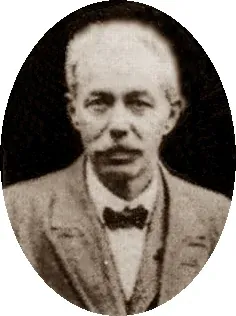
Manuel da Silva Mendes (1867–1931) was a Portuguese scholar, lawyer, and collector of Chinese art who lived in Macau from 1901. He taught at the Liceu de Macau and twice served as interim rector, practised law, served as judge and prosecutor, and presided over the Leal Senado. An early systematic collector of Chinese art whose collection helped form the Luís de Camões Museum, he was also a pioneer in introducing Taoist thought and Chinese culture to the Portuguese-speaking world.
A Portuguese scholar who gave the second half of his life to Macau — in the classroom, the courtroom, the town hall, and among cabinets of Chinese ceramics, writing out his understanding of the East.
Manuel da Silva Mendes was a Portuguese lawyer, scholar, and collector of Chinese art. After moving to Macau in 1901 he worked as teacher, jurist, and municipal officeholder, and became renowned for his sinology and art collecting — one of the most representative intellectuals of early-twentieth-century Macau.
Profile
- Chinese Name: 文第士
- Portuguese Name: Manuel da Silva Mendes
- Born: 23 October 1867 (Vila Nova de Famalicão, Portugal)
- Died: 30 December 1931 (Macau)
- Region: Portugal / Macao
- Domains: Culture · Academia · Law
- Subject type: Lawyer · Sinologist · Collector
Background
Silva Mendes was born in 1867 in Vila Nova de Famalicão, northern Portugal, and took a law degree at the University of Coimbra in 1895. In 1901, shortly after marrying, he set out for Macau and spent the rest of his life in this Chinese–Portuguese meeting point. Though not himself Macanese, he became deeply woven into Macau society and a formative teacher in the Macanese community's cultural memory — the later Macanese scholar Luís Gonzaga Gomes was among his students.
Career
I. Teacher and school administration
Silva Mendes taught Portuguese and Latin at the Liceu de Macau and twice served as interim rector (1904–1907 and 1909–1914), educating a generation of Macau students.
II. Law and municipal office
Beyond teaching, he practised law, served as judge and prosecutor, and held the presidency of the Leal Senado along with municipal administrative duties, engaging deeply in Macau's public affairs.
III. Sinology and Taoist studies
He was among the first scholars to systematically introduce Chinese philosophy, Taoist thought, and religion to the Portuguese-speaking world, authoring works such as Lao-Tze e sua Doutrina (1908), and is regarded as a pioneer of serious study of Chinese culture.
Defining Moments
I. Collecting Chinese art
Silva Mendes held a deep interest in Chinese art and systematically collected Chinese ceramics, most notably Shiwan ware, and is considered one of the earliest serious collectors and students of this pottery.
II. The foundation of the Luís de Camões Museum
His rich collection of Chinese art was later acquired by the Portuguese state and became an important basis for Macau's Luís de Camões Museum (later folded into the Macau Museum of Art), turning his collection into a public cultural asset.
Public Character
Spanning education, law, municipal affairs, and sinology, Silva Mendes was one of the most substantial intellectuals of early-twentieth-century Macau and a bridging figure of Chinese–Portuguese cultural exchange. This archive presents his public life and cultural contribution neutrally.
Key Achievements
- Taught at the Liceu de Macau; twice interim rector (1904–1907, 1909–1914)
- Practised law; served as judge, prosecutor, and president of the Leal Senado
- An early systematic collector and student of Chinese art, especially Shiwan ceramics
- His collection became an important basis of the Luís de Camões Museum
- Author of sinological works including Lao-Tze e sua Doutrina
Information compiled from publicly available sources. If anything is inaccurate or needs updating, please contact us — we aim to respond within 48 hours.