
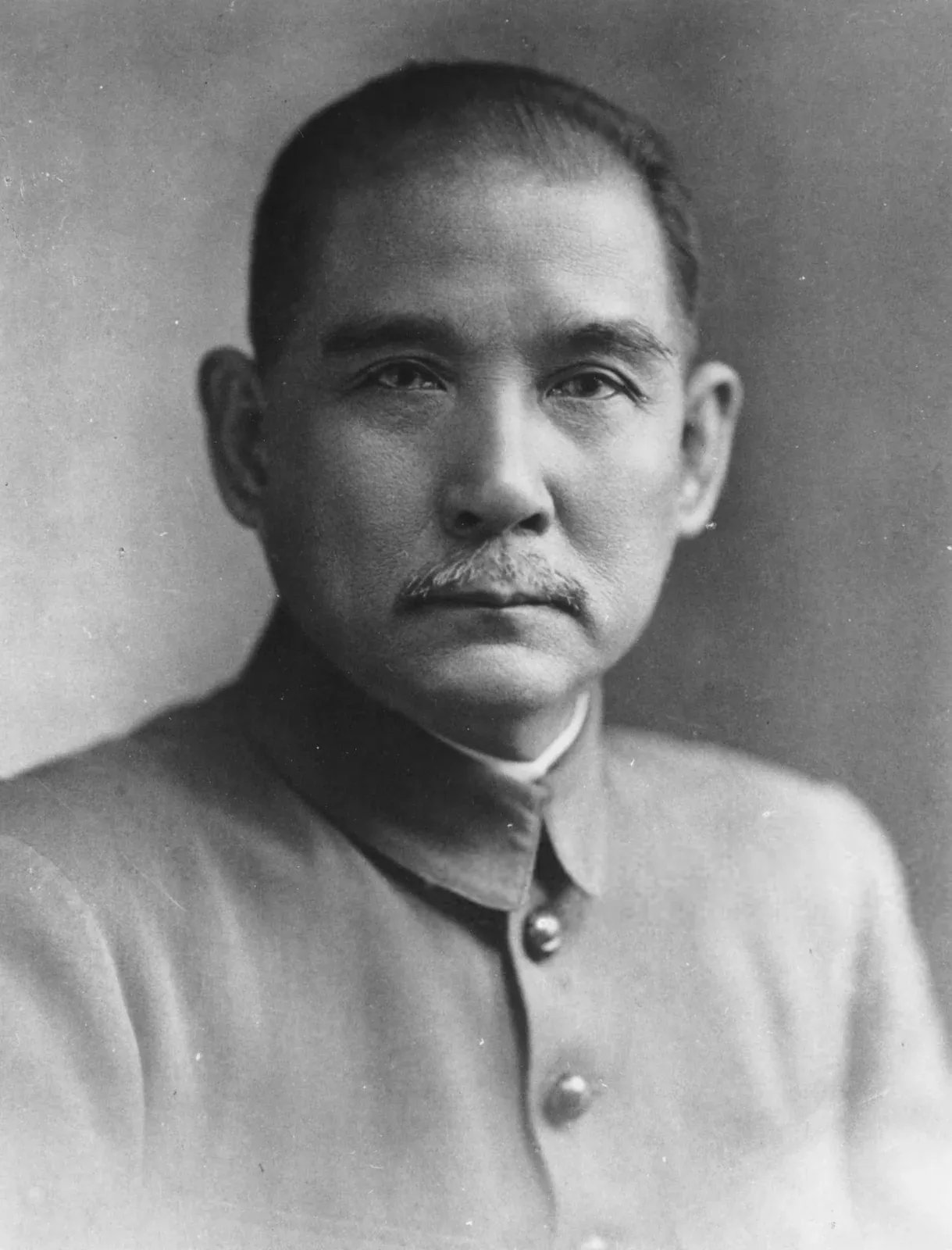
A modern Chinese revolutionary and a founding figure of the Republic of China. After graduating from the Hong Kong College of Medicine for Chinese in 1892, he was invited to practise at Kiang Wu Hospital in Macau, regarded as the territory’s first Chinese doctor of Western medicine, and opened a Chinese-Western pharmacy. He later devoted himself to revolution, founding the Revive China Society and the Tongmenghui, and in 1912 became provisional president of the Republic of China. Macau was among the important places of his early medical practice and the stirrings of his revolutionary thought.
Before he turned to revolution, he was a Western-medicine doctor at Kiang Wu Hospital in Macau; the scalpel and the pharmacy were among the first steps of his vision to remake a nation.
Sun Yat-sen was a modern Chinese revolutionary and a founding figure of the Republic of China. Between 1892 and 1893 he practised medicine at Kiang Wu Hospital in Macau, regarded as the territory’s first Chinese doctor of Western medicine.
Profile
- Chinese Name: 孫中山 (given name 文, courtesy name 載之, style name 逸仙)
- English Name: Sun Yat-sen
- Born: 12 November 1866 (Cuiheng village, Xiangshan, Guangdong)
- Died: 12 March 1925 (Beijing)
- Region: Xiangshan, Guangdong · Hong Kong · Macau · overseas
- Domains: Politics · Academia (medicine)
- Subject type: Historical figure · Revolutionary · Physician
Background
Sun Yat-sen was born in Cuiheng village, Xiangshan, Guangdong. As a young man he studied in Honolulu, where he encountered Western culture and institutions. He later trained in Western medicine in Hong Kong, graduating with distinction from the Hong Kong College of Medicine for Chinese in 1892.
Career
I. Medical practice (1892–1893)
In 1892 Sun was invited to practise at Kiang Wu Hospital in Macau, regarded as the hospital’s first Western-medicine doctor and the first Chinese doctor of Western medicine in Macau. He then opened a Chinese-Western pharmacy (孫醫館) in the territory, treating patients and dispensing medicine, and was praised in the press for his skill and conduct. From about 1893 he moved on to practise in the Guangzhou area.
II. Revolutionary career
Alongside his medical work, Sun grew increasingly concerned with the state of the nation. In 1894, after his petition to the official Li Hongzhang went unanswered, he travelled to Honolulu and founded the Revive China Society under the call to “rejuvenate China”. In 1905, in Japan, he united several revolutionary groups into the Tongmenghui and set out his Three Principles of the People: nationalism, democracy and the people’s livelihood.
III. Founding of the Republic of China
After the 1911 Revolution, on 1 January 1912 Sun became provisional president of the Republic of China in Nanjing. He continued in political and revolutionary activity until his death in Beijing in 1925. In 1940 the National Government formally honoured him as the “Father of the Nation”.
Connection to Macau
Macau was an important site of Sun’s early medical practice. Between 1892 and 1893 he worked at Kiang Wu Hospital and opened a Chinese-Western pharmacy in Macau. The city was also among the places where he encountered new ideas and his revolutionary purpose took shape. Macau today maintains related sites, including the Sun Yat-sen Memorial House, commemorating his ties to the territory.
Public Character
Sun Yat-sen is widely regarded as a pivotal figure in modern Chinese history and a founder of the Republic of China. This archive presents his shift from physician to revolutionary neutrally, focusing on his early medical years connected to Macau and offering no modern political judgement.
Key Facts
- Born in Cuiheng village, Xiangshan, Guangdong, in 1866; died in Beijing in 1925
- Graduated from the Hong Kong College of Medicine for Chinese in 1892
- Practised at Kiang Wu Hospital in Macau, 1892–1893, regarded as Macau’s first Chinese doctor of Western medicine
- Opened a Chinese-Western pharmacy (孫醫館) in Macau
- Founded the Revive China Society in 1894 and the Tongmenghui in 1905
- Became provisional president of the Republic of China in 1912
- Honoured as “Father of the Nation” by the National Government in 1940
Information compiled from publicly available sources. If anything is inaccurate or needs updating, please contact us — we aim to respond within 48 hours.