
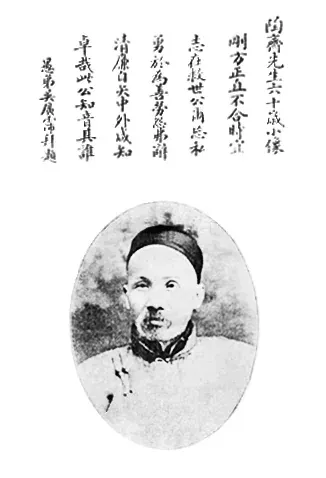
A late-Qing reform thinker, comprador and industrialist who worked for foreign firms and modern Chinese enterprises such as the China Merchants Steam Navigation Company. His major work《盛世危言》(Words of Warning in a Prosperous Age) argued for learning from the West to enrich and strengthen China, and was widely influential. From 1884 he retired to the Mandarin’s House (鄭家大屋) in Macau, where he revised the work that became this book. The Mandarin’s House is today part of the Historic Centre of Macao, a UNESCO World Heritage Site.
A late-Qing comprador and industrialist who set down the abacus inside a Macau courtyard house and wrote a book to warn his age.
Zheng Guanying was a late-Qing reform thinker, comprador and industrialist whose major work《盛世危言》was completed at the Mandarin’s House in Macau — a building now part of the Historic Centre of Macao, a UNESCO World Heritage Site.
Profile
- Chinese Name: 鄭觀應 (courtesy name 正翔, style name 陶齋)
- English Name: Zheng Guanying
- Born: 24 July 1842 (Xiangshan, Guangdong)
- Died: 14 June 1921
- Region: Xiangshan, Guangdong · Shanghai · Macau
- Domains: Politics · Business · Culture
- Subject type: Historical figure · Reform thinker · Comprador · Industrialist
Background
Zheng Guanying was born in Xiangshan, Guangdong (now part of Zhongshan), and went to Shanghai as a young man. Growing up in the world of Sino-foreign trade, he came to know Western commercial practice well while remaining concerned with the affairs of the state, gradually moving from a foreign-firm comprador to a thinker who advocated reform and self-strengthening.
Career
I. Foreign firms and modern enterprises
From about 1860 Zheng worked as a comprador for the foreign firm Butterfield & Swire in Shanghai, mastering modern commerce and shipping. He later helped manage several modern Chinese enterprises, including the China Merchants Steam Navigation Company, the Shanghai Cotton Cloth Mill and the Shanghai Telegraph Bureau, making him a leading industrial figure of the Self-Strengthening era.
II. Reform writings
Zheng’s earlier book《易言》already argued for learning from the West and developing commerce and industry. He continued to revise and expand it, completing《盛世危言》(Words of Warning in a Prosperous Age) in 1894, which set out a systematic case for enriching and strengthening the country, developing commerce and industry, and establishing a parliament. The work was widely read in the late Qing by both the reform and revolutionary generations.